TTRPG Worldbuilding Tools That Actually Keep Your Campaign Organized
Worldbuilding is the fun part — until your notes are spread across four apps and you can't find the name of that tavern mid-session. Here's how to actually keep it all together.
Every DM starts worldbuilding the same way. A notebook for NPCs. A Google Doc for the town history. A Discord message you sent yourself with that faction name you came up with in the shower. A scrap of paper with a dungeon sketch that somehow survived three moves.
It works fine for the first few sessions. Then a player asks what the innkeeper's name was from four sessions ago, and you're flipping through a notebook while everyone watches.
Good worldbuilding isn't about how much you build — it's about whether you can find it when you need it. Here's a rundown of the main approaches, what each one is actually good at, and how to pick one that holds up after session 20.
What your worldbuilding system actually needs to track
Before picking a tool, it helps to be specific about what you're organizing. A campaign that's been running for a few months tends to accumulate:
- Locations — cities, dungeons, regions, specific buildings. With enough detail to describe them on the fly.
- NPCs — who they are, what they want, which faction they belong to, whether the party has met them.
- Factions — the guilds, governments, cults, and families that shape the world's politics.
- Quests and plot threads — active, completed, and the ones you planted six sessions ago that nobody's found yet.
- Lore and history — the stuff that makes your world feel like it existed before the players arrived.
- Items and artifacts — especially the ones with story attached.
The reason scattered notes fail isn't that the information doesn't exist — it's that nothing is linked. You find the NPC, but not which town she's in. You find the town, but not which quest sent the party there. The system that solves this is one where everything connects.
The physical approach
A good campaign journal or a stack of index cards is still one of the fastest ways to capture ideas. There's no login, no loading time, and writing by hand genuinely helps some people think.
The limits are what you'd expect: you can't search it, you can't link entries to each other, and it doesn't travel well unless you bring it everywhere. For quick session notes and in-the-moment sketching, physical is great. As your primary worldbuilding system for a long campaign, it starts to strain.
If you want physical tools that pair well with a digital system, the Record of Adventure journal is built for tracking sessions, quests, and NPCs at the table, while your organized notes live elsewhere. And the Adventure Log keeps session recaps in one place so you can reference them without digging through a notebook.
The Notion approach
Notion is genuinely excellent for campaign worldbuilding once you set it up right. A proper DM workspace has linked databases — so when you open a location, you see which NPCs live there, which quests are tied to it, and what faction controls it. That's the linked-database approach, and it's powerful.
The catch is setup time. Building that system from scratch takes hours, and most templates you'll find online are either too simple or overly complex for actual table use.
The Lorekeeper Notion template skips the setup entirely — it's a complete 5e worldbuilding workspace with linked databases for NPCs, locations, adventures, loot, and session notes, all pre-connected and ready to go. Works with a free Notion account.
Dedicated campaign management platforms
If you'd rather use something built specifically for TTRPG campaigns — rather than adapting a general productivity tool — there are a few dedicated platforms worth knowing about.
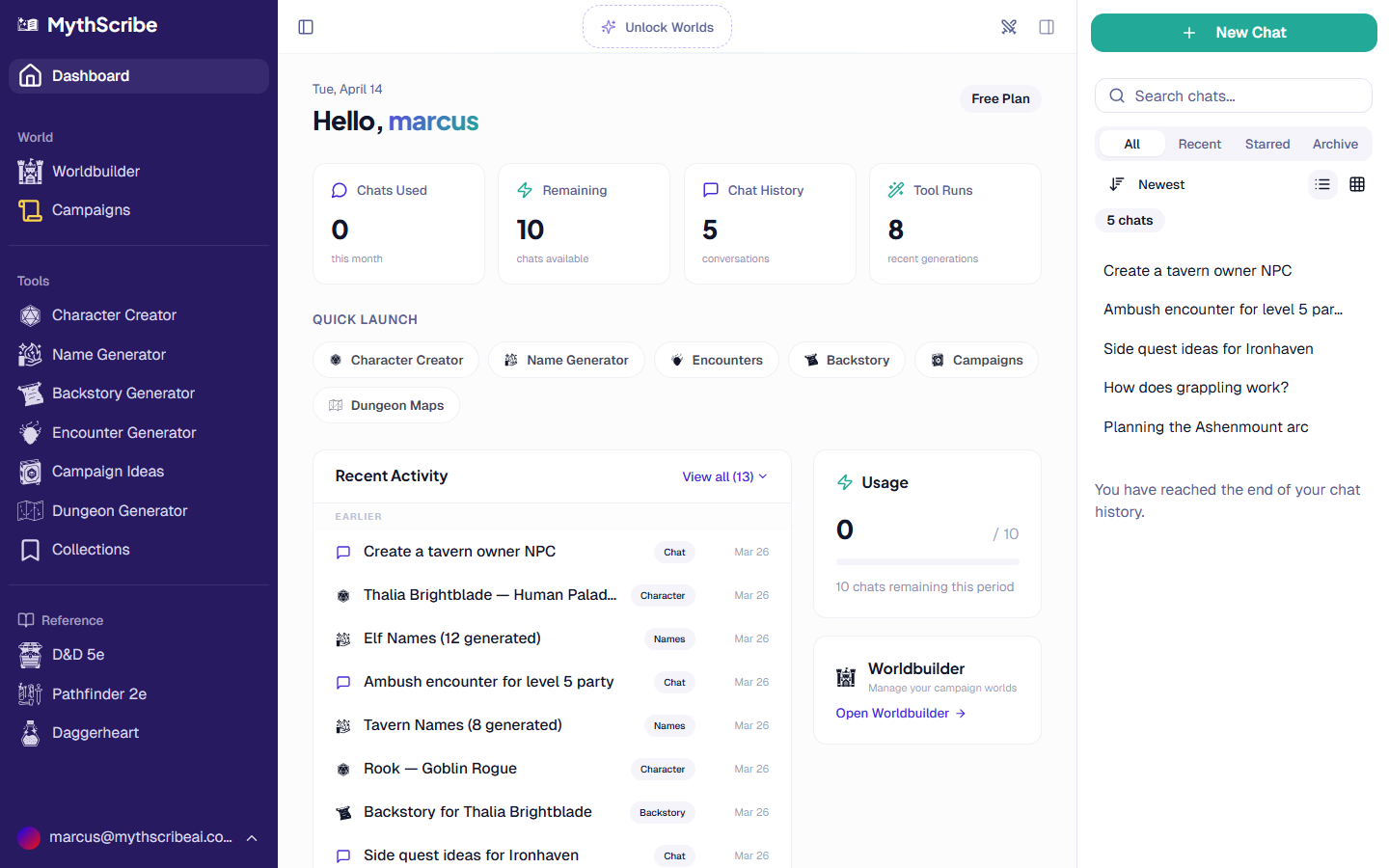
We've been partnering with MythScribe.io on this one, and it's the most complete campaign management platform we've come across. It just launched and it's worth checking out if you run D&D 5e, Pathfinder 2e, or Daggerheart.
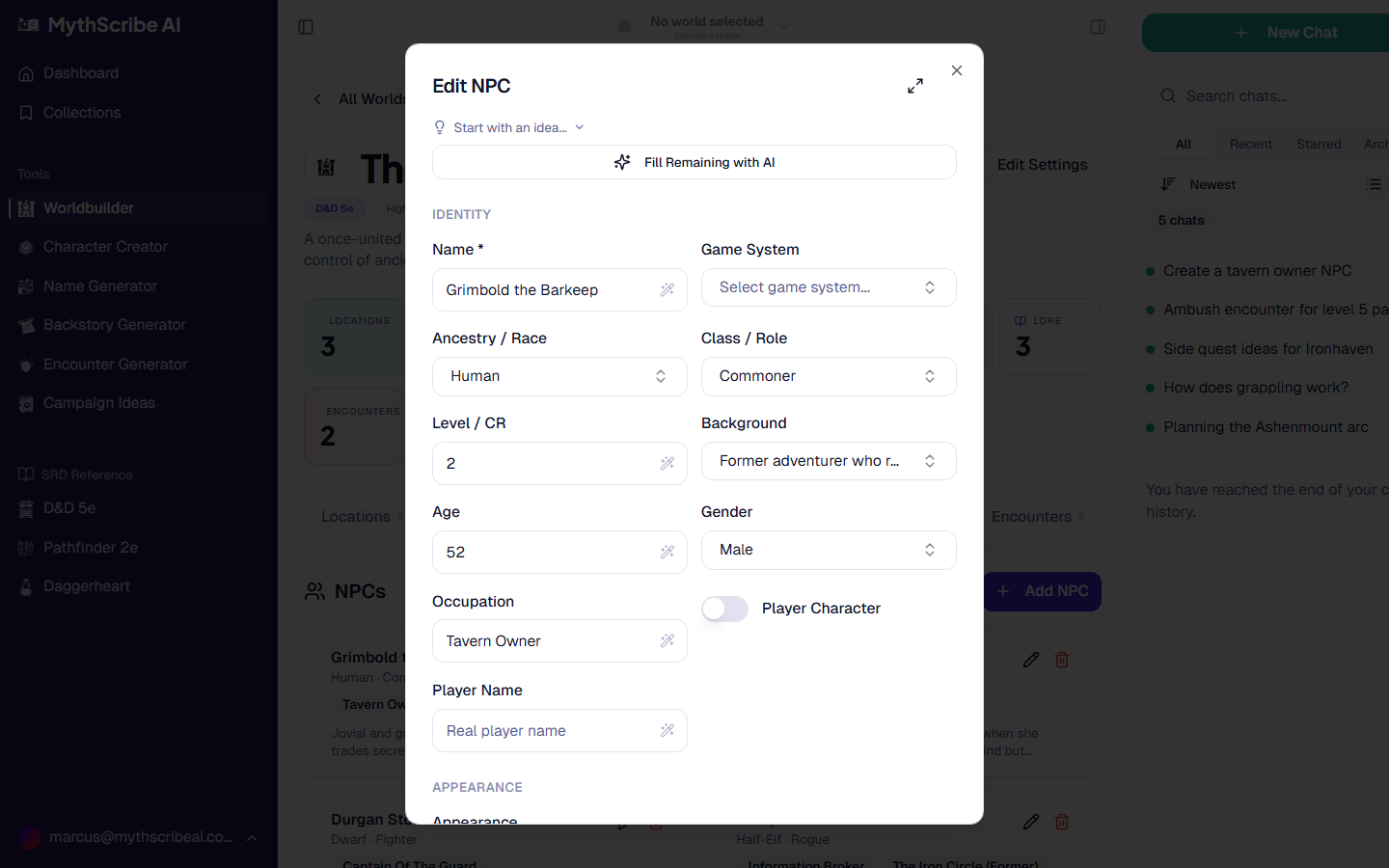
The worldbuilder is the core feature. It organizes your campaign into structured tabs — Locations, NPCs, Factions, Quests, Items, Events, and Lore — so everything lives in one place and nothing gets lost between sessions. NPCs are tagged to factions and locations. Quests can be linked to the characters and places involved. It's the linked-database approach without needing to build it yourself.
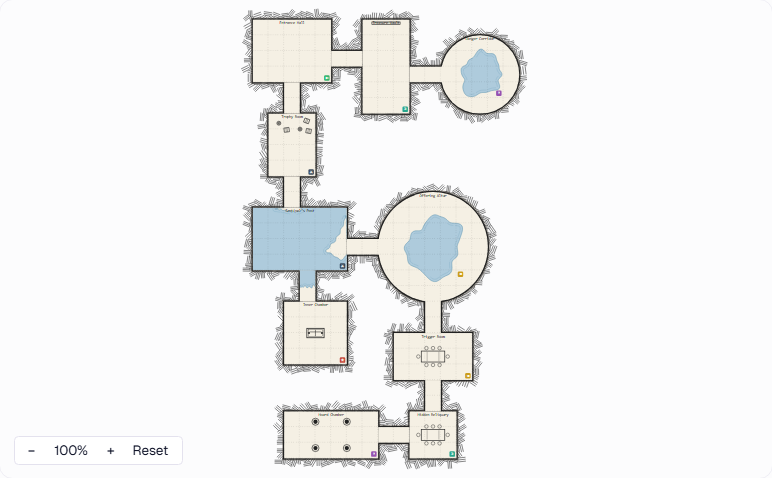
There's also a dungeon generator that produces actual visual dungeon maps — not just a description, but a usable map with rooms, corridors, and named areas. For DMs who spend time drawing maps or piecing together tiles, it's a solid shortcut.
It supports D&D 5e, Pathfinder 2e, and Daggerheart natively — so if your group switches systems or runs multiple campaigns, everything works in one account. There's a free tier if you want to try it before committing: mythscribe.io.
Which approach is right for you
There's no universal answer, but here's a useful shortcut:
- You're running a short or one-shot campaign. Physical notes or a single doc are fine. Don't over-engineer it.
- You prefer working in Notion and want a head start. Lorekeeper gives you a complete linked system without the setup time.
- You want a dedicated tool built for campaigns, not repurposed from a productivity app. MythScribe.io is the most purpose-built option we've seen.
- You want to keep notes at the table but organize them digitally. A physical session journal paired with a digital worldbuilding system is the combination most DMs land on. The Record of Adventure handles the physical side well.
The biggest mistake is waiting until your notes are a mess before picking a system. Start with something simple, stay consistent, and add structure as your campaign grows. You don't need to worldbuild your whole setting before session one — you just need somewhere to put things when you create them.
FAQ
What is the best tool for TTRPG worldbuilding?
It depends on how you prefer to work. Physical journals are great for quick notes at the table but hard to search. Notion templates (like Lorekeeper) give you a flexible linked database that works across devices. Dedicated platforms like MythScribe.io are built specifically for campaign management with separate tabs for locations, NPCs, factions, quests, and lore — no setup required. The best tool is the one you'll actually use consistently.
How do DMs organize their worldbuilding notes?
Most DMs start with scattered notes and eventually move toward a single system. The most common approaches are a physical campaign journal, a Notion workspace with linked databases, or a dedicated campaign management platform. The key is having one place where locations link to NPCs, NPCs link to factions, and factions link to quests.
What should a TTRPG worldbuilding system include?
At minimum: locations, NPCs (with faction tags), active quests, and lore/history. Ideally everything should be linkable — open a city and see which NPCs live there and which quests are active. A system that forces you to cross-reference separate docs manually will eventually get abandoned.
Is worldbuilding necessary for running D&D?
No — published settings handle the big-picture worldbuilding for you. But even in the Forgotten Realms you're building the local detail: the innkeeper's personality, the specific dungeon the party found, the faction tension in this particular city. That's worldbuilding at the campaign scale, and a system for tracking it makes a real difference over a long run.
What is the best free worldbuilding tool for D&D?
Notion with the Lorekeeper template is one of the best free options — it sets up the linked database structure without requiring any prior Notion experience. MythScribe.io also has a free tier with access to the worldbuilder and map generator. Both are worth trying before paying for anything.
Keep Your Campaign Together
The Lorekeeper Notion template gives you a complete linked worldbuilding system for D&D 5e — NPCs, locations, quests, lore, and session notes, all connected. Works with a free Notion account.