The D&D Campaign Planner Guide: Tools, Templates, and PDFs That Work
An honest look at every reasonable D&D campaign planner — free PDFs, printable templates, Mythscribe, Notion templates, and full campaign managers — with a decision guide for which one actually fits how you run games.
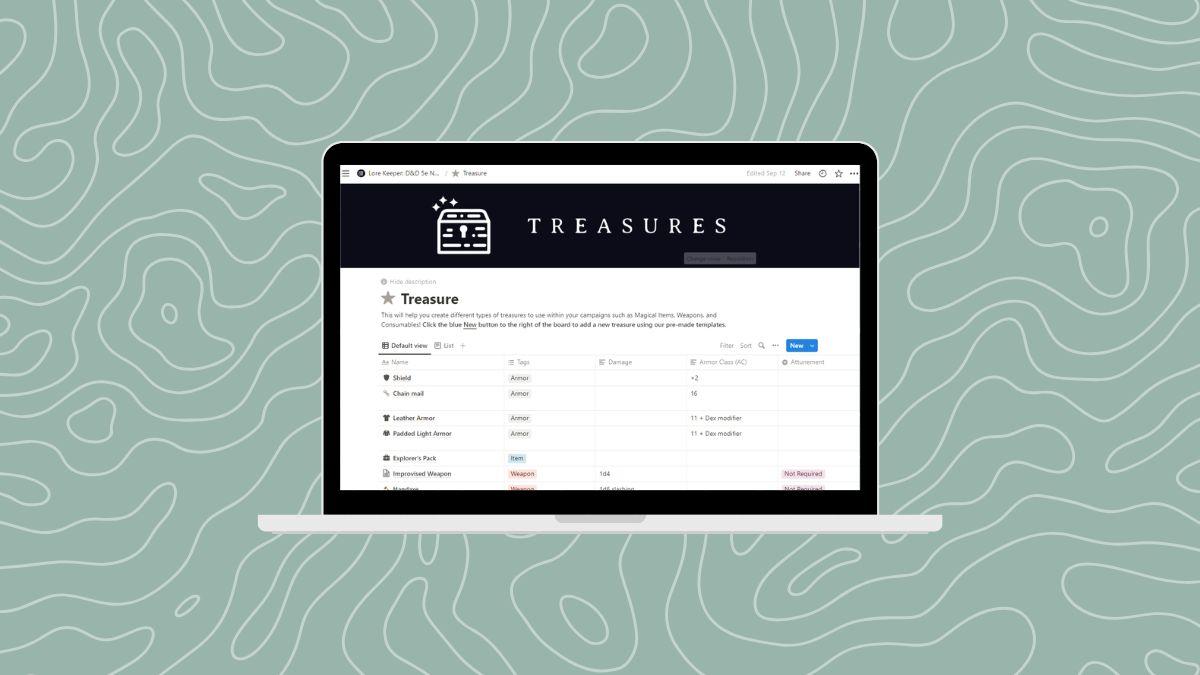
If you've ever opened a blank Google Doc to plan a D&D campaign and stared at it for forty minutes, you already know the problem. The blank-page problem isn't a lack of ideas — it's a lack of structure. A good D&D campaign planner gives you somewhere for every idea to land, so you don't have to remember where you put that one NPC name two months ago.
This guide walks through every reasonable D&D campaign planner option — free PDFs, printable templates, digital tools like Mythscribe, Notion templates, and full campaign managers — and helps you pick the one that actually fits how you run games.
Quick preview: if you're digital-first and want a ready-made structure, a Notion template like Lorekeeper will save you the most setup time. If you want a TTRPG-specific app with assisted tools and a chat interface, Mythscribe is the comparison to make. If you prefer paper at the table, a printable PDF planner is hard to beat. If you're somewhere in the middle, the answer is usually a hybrid — and we'll explain how to set that up too.
No tier lists. No “10 BEST” ranking that's really just affiliate links. Just an honest look at what each option does well and where it falls down, so you can make a decision and get back to building your world.
What a Good D&D Campaign Planner Includes
Before picking a tool, it helps to know what the tool needs to hold. A campaign planner — regardless of format — is doing five jobs:
- NPC tracker. Names, motivations, relationships, and where you last left them. Especially important when a one-off character becomes important three sessions later.
- World state. Locations, factions, ongoing conflicts. The stuff that exists whether your players go there or not.
- Plot threads. What's actively in motion, what's waiting for a trigger, and what's resolved. Easy to lose track of without a clear list.
- Session log. What happened, who was there, what changed. Useful for the “wait, what did we learn about the cult last time?” moments.
- Loot and rewards. What's been awarded, what's planned, what's still in the world to find.
If a planner doesn't do these five things — or makes any of them painful — it'll get abandoned within a few sessions. That's the test, in practical terms. If it doesn't survive a busy week, it's not the right tool.
Free D&D Campaign Planners
If you don't want to spend a dollar before you know what you need, there's a real chance one of these will get you most of the way there.
Notion (free plan)
Notion's free plan gives you unlimited pages and unlimited databases. You can build a campaign planner from scratch with linked databases for NPCs, locations, sessions, and loot. It's the most flexible free option, but the catch is real: building it from scratch takes 8–15 hours, and most people don't finish. (More on the “skip the setup” route below.) See our step-by-step Notion setup guide if you want to go the DIY route.
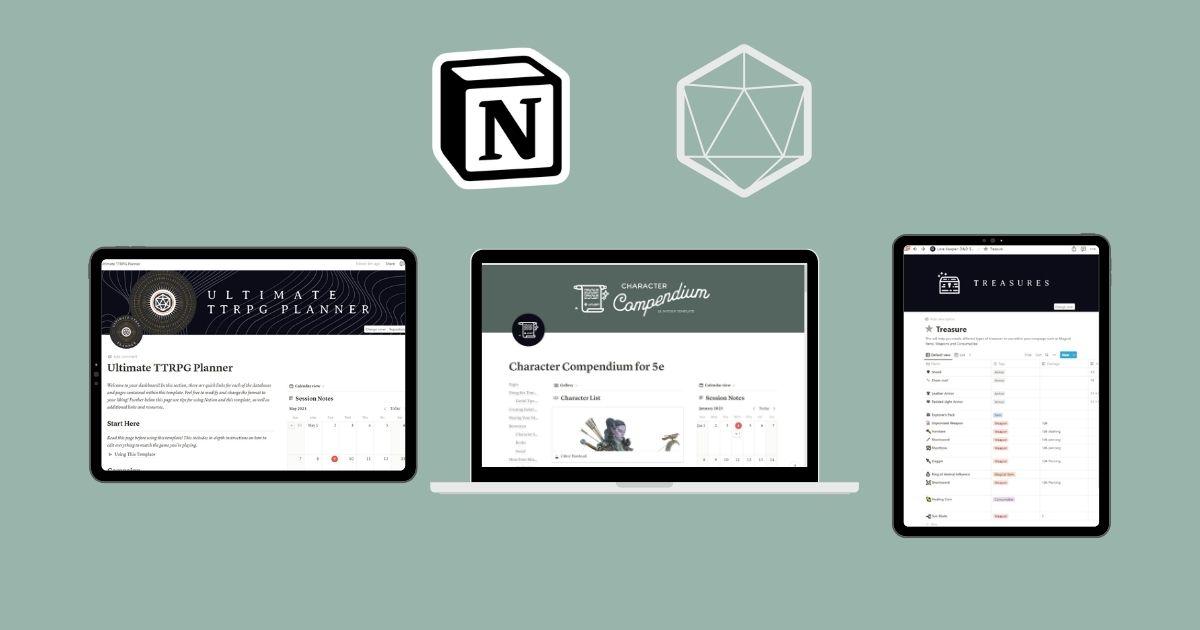
A Notion campaign dashboard with linked NPC, location, and session databases.
Obsidian (free)
Obsidian is a local-first markdown app, free for personal use. It excels at backlinks and graph view, which some DMs love for worldbuilding. The learning curve is steeper than Notion and there's no native database, but it's extremely powerful once it clicks. Best for DMs who already think in markdown.
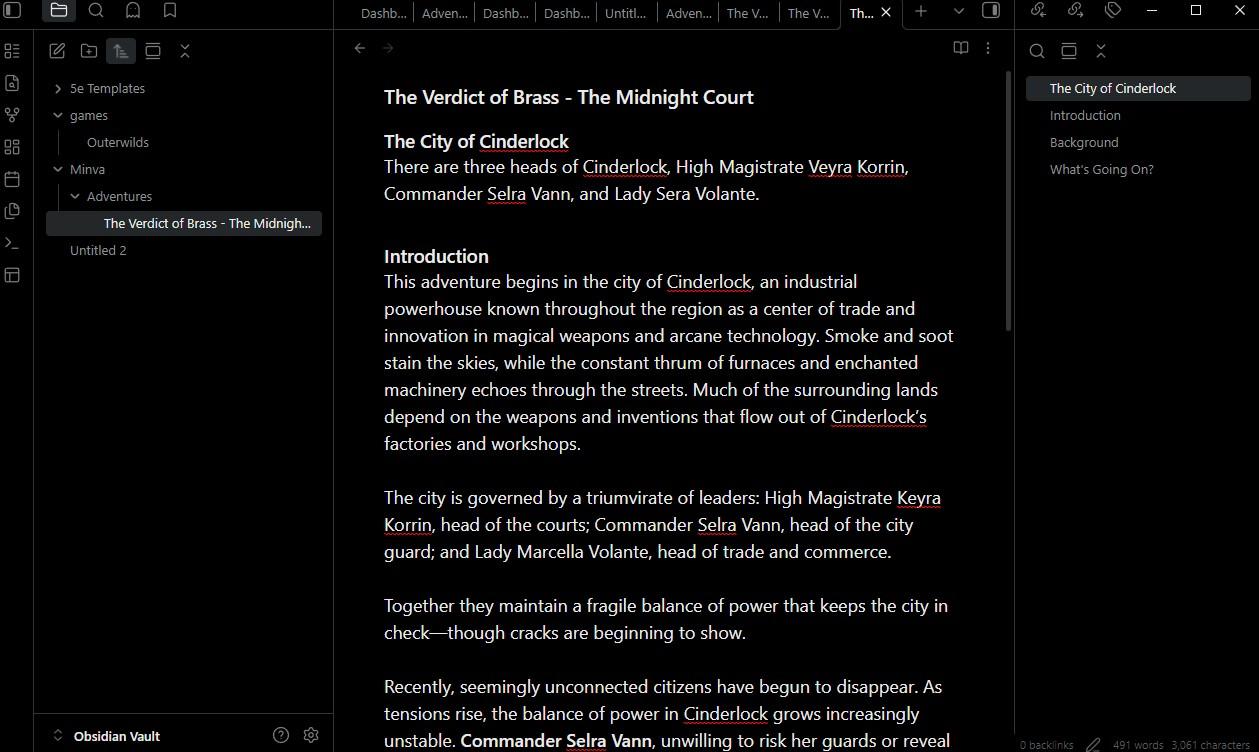
Obsidian's markdown editor with backlinks and graph view.
Free Etsy and DriveThruRPG PDFs
A handful of D&D campaign planner PDFs are listed free on Etsy and DriveThruRPG as creator-supported giveaways. Quality varies widely. Search for “free D&D campaign planner PDF” and read the recent reviews before downloading — the good ones are good, the bad ones are unusable.
Free Wondrous Hooks PDF + 10% off your first order
12 ready-to-run quest hooks (Fantasy & Fable Vol. 1), plus SUBSCRIBER10 and new tools — a couple of times a month, never spam.
D&D Campaign Planner PDFs
PDF planners win for one reason: they don't need WiFi, electricity, or a charged battery. If your group plays at someone's kitchen table on Friday nights, a printable planner is hard to beat.
A good D&D campaign planner PDF will typically include:
- A campaign overview page (premise, themes, target tone)
- Session prep sheets (one per session, with NPCs, locations, and encounters)
- World-state pages for locations and factions
- A blank NPC sheet template you can photocopy
- Optional: a session debrief page for what changed
The biggest downside is updating. When a printed NPC dies or moves, you either scratch them out or print a new sheet. For long campaigns, the paperwork stacks up. PDFs from Etsy and DriveThruRPG range from free to about $15 USD. Higher prices usually mean fancier layouts and a more cohesive theme — not necessarily better structure. We'd suggest looking at recent reviews and previews before paying for the “premium” tier.
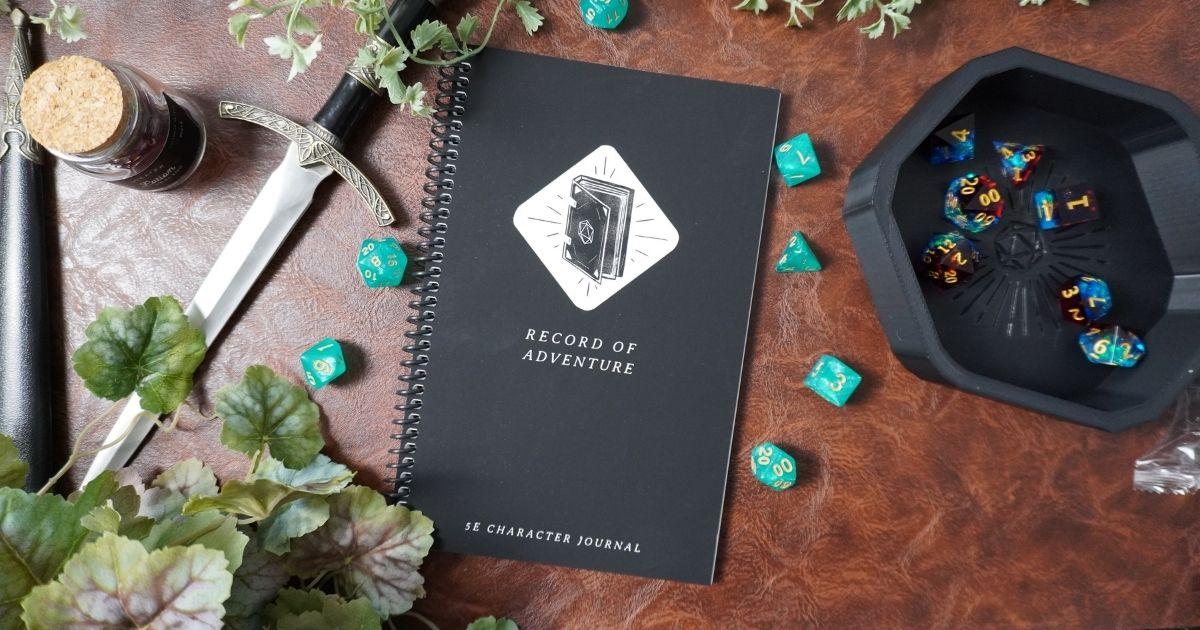
A printed campaign journal — the paper-at-the-table alternative to a digital planner. See our D&D journal lineup for player and DM options.
D&D Campaign Planner Templates
Templates are the middle ground between “build it yourself” and “buy a printed PDF.” You get a starting structure, but you can customize as the campaign grows.
Notion templates
Notion's killer feature for D&D is linked databases. An NPC can reference the location they're in, the faction they belong to, and the sessions they appeared in — all linked, all searchable. Building this from scratch is the multi-hour project mentioned earlier. A pre-built Notion template gets you the same setup in minutes.
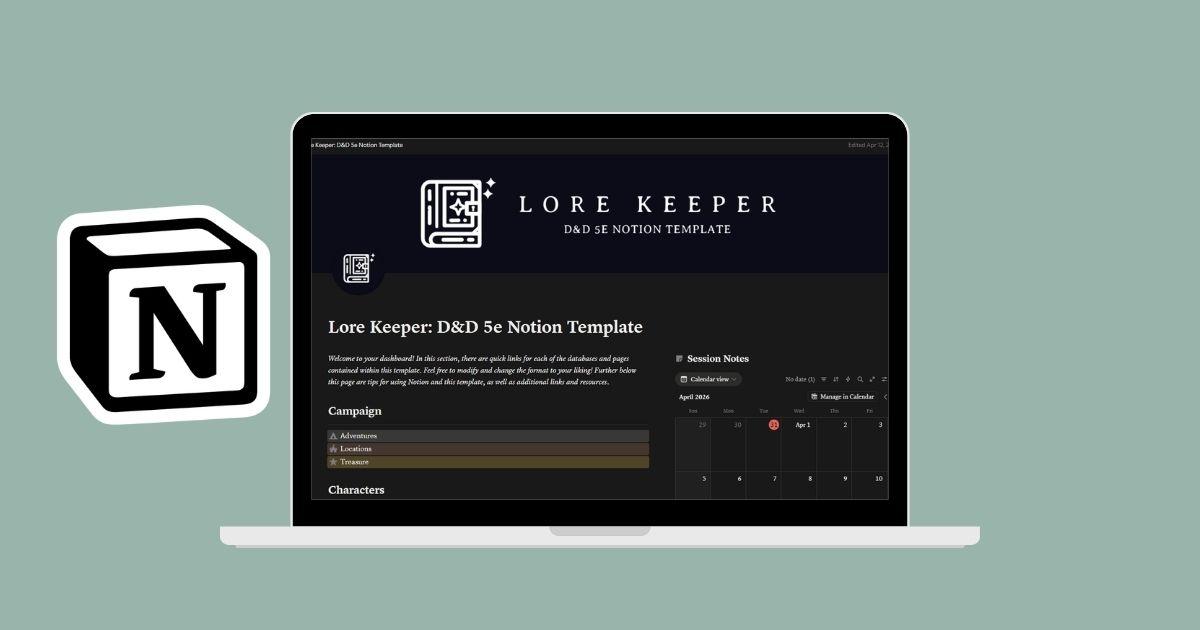
Lorekeeper for Notion — ready-made linked databases for D&D campaign management.
Lorekeeper for Notion
The Lorekeeper Notion template is built for this exact use case — linked databases for NPCs, locations, sessions, factions, loot, and worldbuilding, plus a session-prep workflow and a player-facing view.
Other Notion templates exist; quality and completeness varies. See our comparison of the best Notion templates for D&D for a broader look.
Mythscribe — TTRPG planner with assisted tools and chat
Mythscribe.io is a different kind of campaign planner: a TTRPG SaaS with assisted tools and a chat interface, rather than a template you fill in yourself. It includes a worldbuilder for NPCs, locations, and lore, plus assisted tools for character creation, encounter design, monster building, name generation, and campaign idea generation. It supports D&D 5e, Pathfinder 2e, and Daggerheart out of the box.
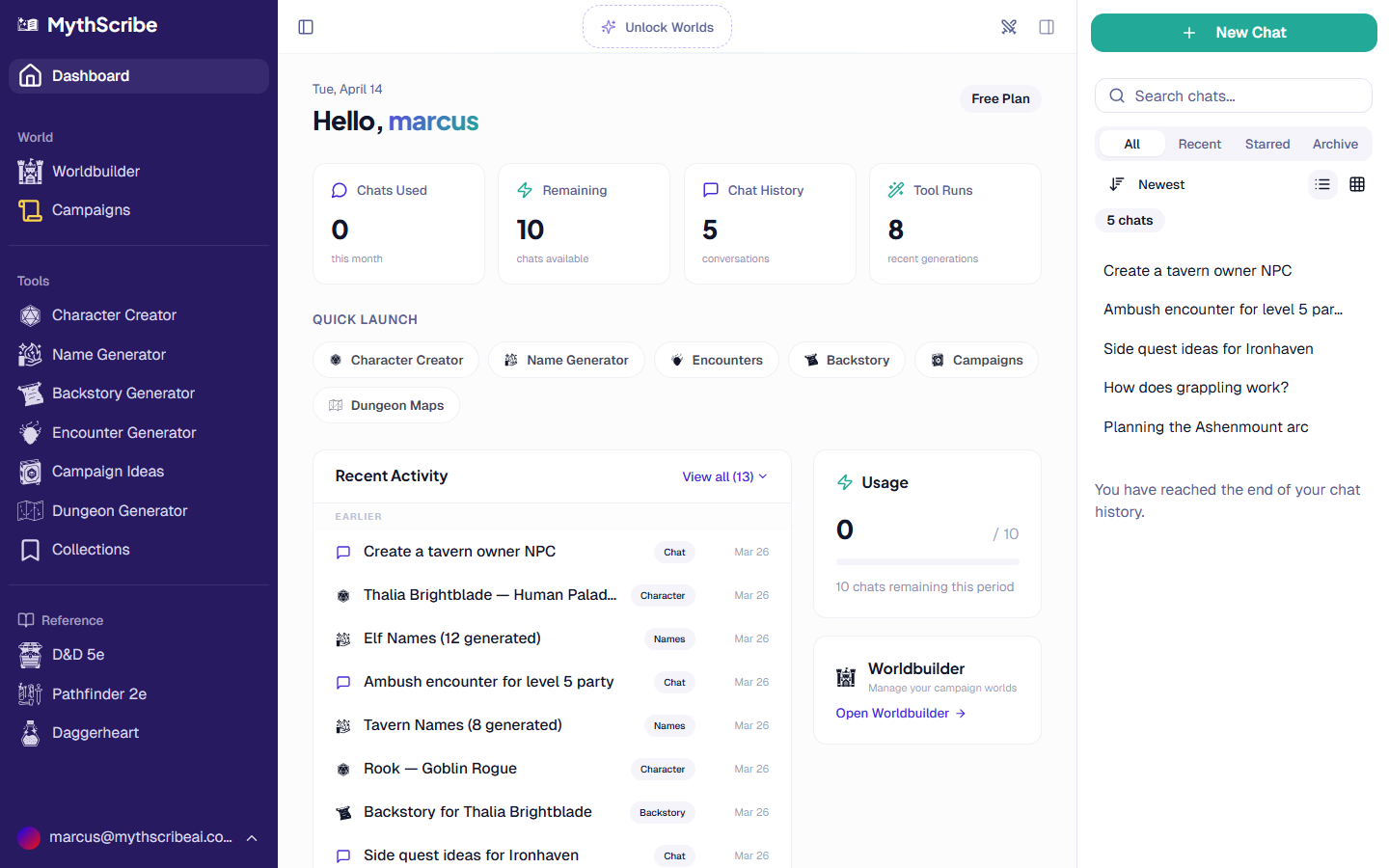
Mythscribe's worldbuilder dashboard.
The distinctive piece is the specialized assistant system. Instead of one generic chat, Mythscribe gives you specialized assistants you can pick between: a Solo DM for running adventures and managing campaigns, a Lore Builder for worldbuilding, a Monster Forge for designing creatures and encounters, and an Encounter Cook for tuning combat and social scenes. Each one has its own tool permissions and specialization, so a Lore Builder request returns lore, not random NPC stat blocks.
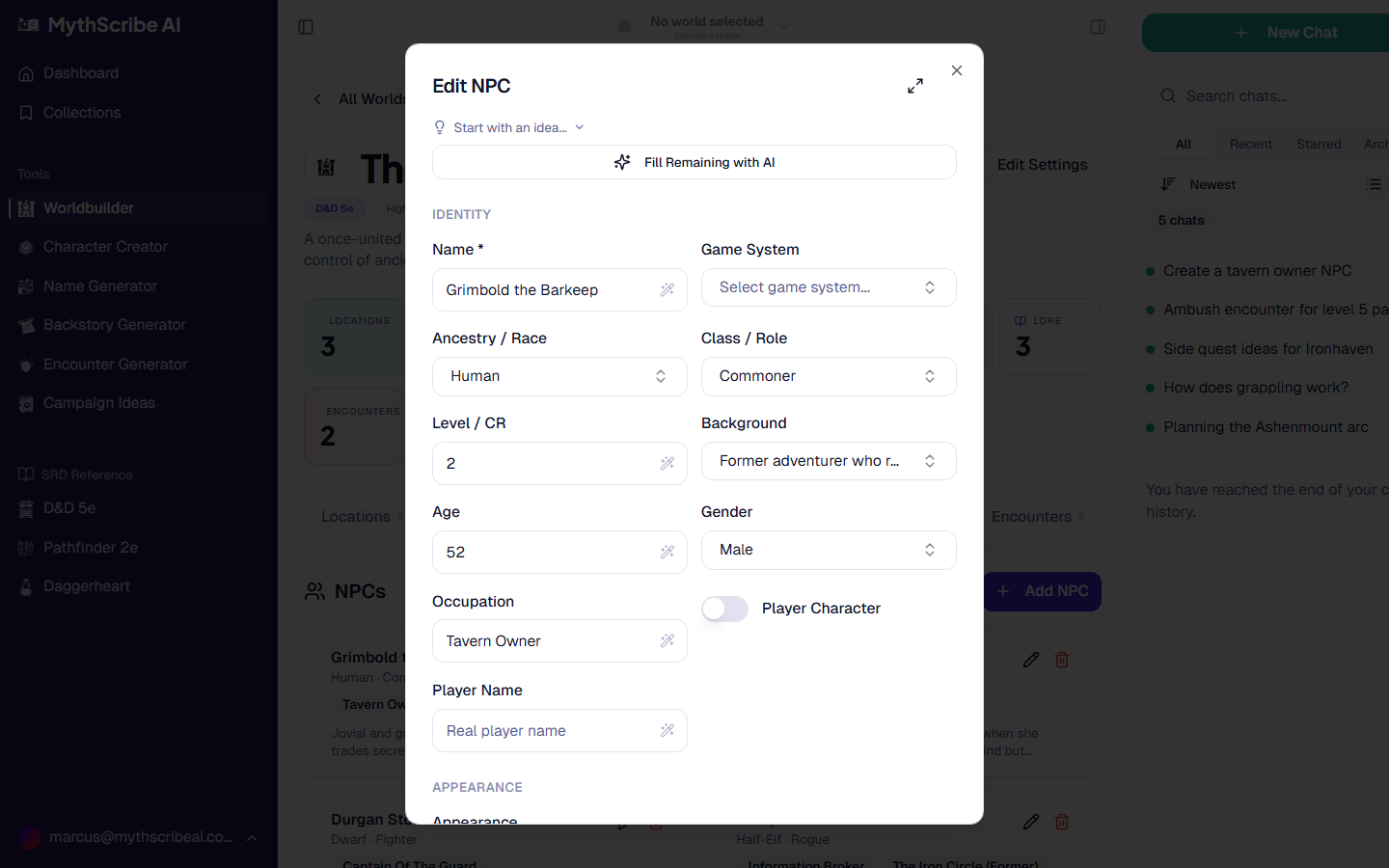
NPC tracker.
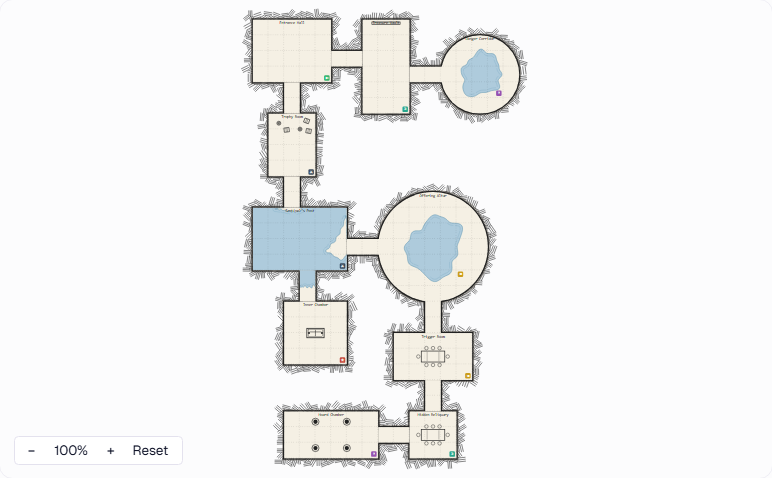
Dungeon map generator.
Mythscribe is a paid SaaS with tiered subscriptions (Seeker, Adventurer, Archmage). The trade-off vs. Notion is clear: you pay for assisted tools and TTRPG-specific structure rather than building everything yourself. If your bottleneck is “I don't want to spend prep time on worldbuilding writing” rather than “I want a precise layout for NPCs,” Mythscribe is the comparison to make.
Printable templates
If you want a paper template that ships ready to fill out, you can find printable D&D campaign planner templates on Etsy and DriveThruRPG. Same caveats as the PDF section above — quality varies, check recent reviews. A printable template plus a binder is a surprisingly durable system for in-person campaigns.
Which D&D Campaign Planner Should You Use?
The honest answer depends on three questions.
1. Where do you actually prep?
- At a desk with a laptop → a digital tool wins (Notion, Mythscribe, or a custom setup)
- On the bus with a notebook → a printable PDF wins, no fight
- Mostly at the table during play → hybrid (paper at the table, digital between sessions)
2. How much prep time per session?
- 30 minutes → a structured template (Lorekeeper, Mythscribe) saves you hours over a year
- 2+ hours and you enjoy worldbuilding → a flexible system (custom Notion, Obsidian) lets you go deep
- Improvising → a session debrief log matters more than a forward-prep system
3. Long campaign or one-shot?
- Long campaign (10+ sessions) → invest in a real planner, it pays back
- One-shot or 3–5 session arc → a one-page PDF is probably enough; don't over-engineer
Most DMs end up combining two approaches: a digital planner between sessions and a paper printout at the table. That's not indecision — it's a sensible workflow split.
FAQ: D&D Campaign Planner
What is a D&D campaign planner?
A D&D campaign planner is any tool — digital or paper — that holds the moving parts of an ongoing D&D campaign: NPCs, locations, factions, plot threads, session notes, and loot. Without one, DMs lose track of details between sessions. The format matters less than having a consistent place for every piece of information to land.
Is there a free D&D campaign planner?
Yes. Notion's free plan supports unlimited pages and databases — enough to build a full campaign planner. Mythscribe.io offers a free tier of its purpose-built TTRPG worldbuilder. Free PDF planners are also available on Etsy and DriveThruRPG, though quality varies. The trade-off with free Notion is the 8–15 hours of setup time; pre-built templates skip that.
What's the best D&D campaign planner template?
Depends on your prep style. For Notion users who want a ready-made setup with linked databases for NPCs, locations, sessions, factions, and loot, the Lorekeeper template is purpose-built for D&D 5e. For DMs who prefer a TTRPG-specific app, Mythscribe ships with worldbuilder templates. For paper-at-the-table DMs, a printable PDF template from Etsy or DriveThruRPG works well.
Do I need a D&D campaign planner for a one-shot?
Probably not a full planner. For a one-shot or short 3-session arc, a single-page session prep sheet usually covers what you need — the encounter, key NPCs, location, and the one or two plot beats. Save the full campaign planner setup for campaigns long enough that you start forgetting what happened three sessions ago.
What should every D&D campaign planner include?
Five things: an NPC tracker, a world-state record, a plot-threads list, session logs, and a loot tracker. If a planner makes any of these painful, it'll get abandoned within a few sessions.
Where to go from here
If you're leaning Notion, the next step is either our how-to-set-up-Notion guide (if you want to build it yourself) or use Lorekeeper as your D&D campaign planner (if you'd rather skip the setup).
If you want assisted worldbuilding tools and a TTRPG-specific app, Mythscribe is worth a look. Pick the lowest tier first and confirm the assistants fit how you think about prep before upgrading.
If you're leaning paper, start with a free PDF from Etsy or DriveThruRPG and upgrade only if you outgrow it.
Whichever you pick: the planner only works if you actually use it. Pick the one that survives a busy week, and the rest of the prep gets easier.