D&D accessories guide
15 D&D Accessories I'd Buy After 7 Years of Playing (2026)
What's worth buying for players and DMs, sorted by the problem each one fixes, with prices checked on October 27, 2026.
By Ian. I've played D&D for 7 years and run Minva, a small tabletop company in Virginia.
Updated
We make 5 of these 15 picks, and they're marked Made by Minva. The Amazon links are affiliate links, so we earn a small commission if you buy through them, at no extra cost to you.
First set free — get a free set of dice with your first box when you start a new Dice Arcana subscription on any plan, including Monthly.
Limited time · new subscriptions only, not renewals
What you need to start
I've played D&D for 7 years, and the honest answer to “what do I need?” is almost nothing. One set of dice, a pencil, a character sheet and the free Basic Rules will get you through your first session and plenty after it. That's the whole list.
Everything below is optional. I sorted it by the problem it fixes at the table, so skip any section your group doesn't have trouble with. If you'd rather browse, everything we make for the table is in our D&D accessories collection.
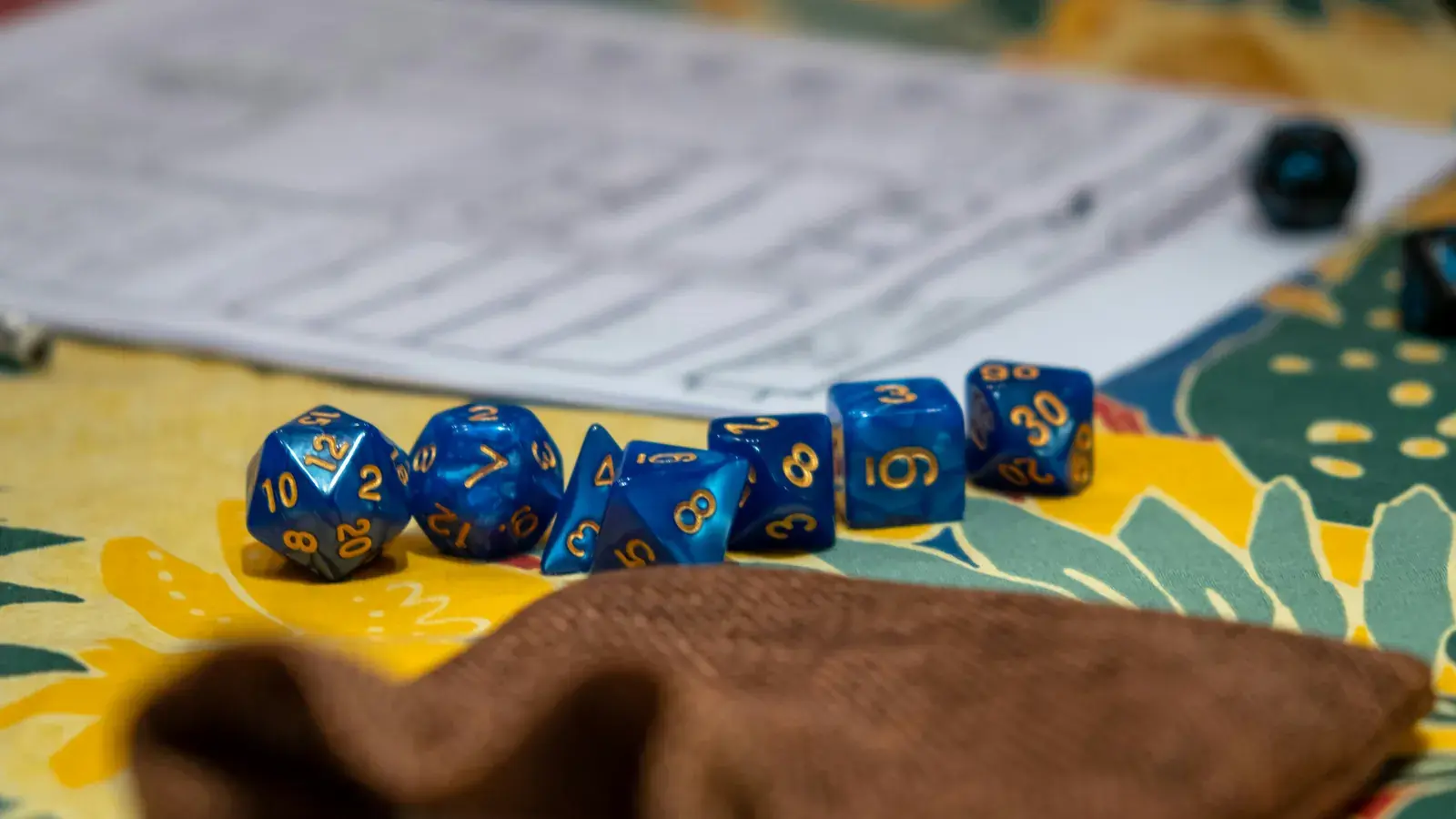
Quick picks
Minva prices are live from our shop. Amazon prices were checked on Oct 27, 2026.
Start here
Learn the rules for free
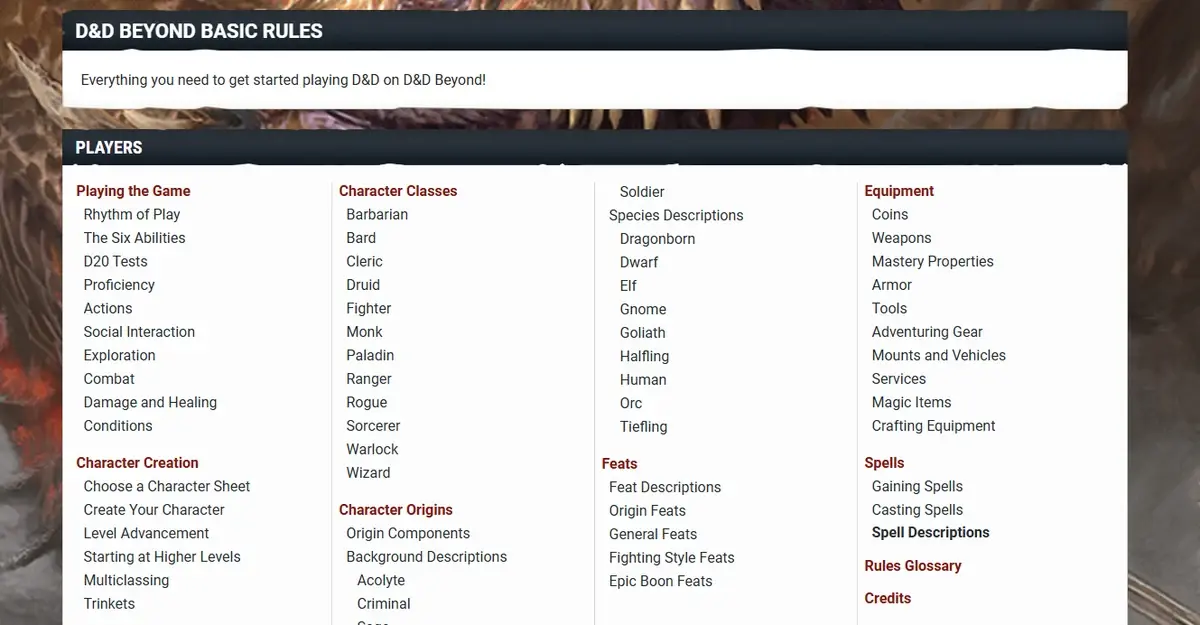
You don't need to buy a book to play. D&D Beyond has the 2024 Basic Rules free online, and they cover enough to make a character and get through your first few sessions.
No. 01Best for your first session
D&D Beyond Basic Rules (2024)
Free · 2024 rules · no account needed to read
It's the free version of the 2024 rules on D&D Beyond, and you can read it in a browser without signing in.
Watch out: It's a cut-down version of the rules, so a lot of the subclasses, spells and feats are only in the 2024 Player's Handbook.
Instead: Buy the 2024 Player's Handbook once you know you'll keep playing.
For players
Tracking HP, conditions and spell slots
Put your sheet somewhere you can write on it all night without wearing a hole through it. HP and spell slots change every round, and erasing the same box 30 times tears the paper.
No. 02Best for hp that changes every round
A sheet protector and a dry-erase marker
Works with any letter-size character sheet
Slide your character sheet into a clear sheet protector and write HP, spell slots and conditions on top, so the paper underneath never tears from erasing.
Watch out: Marker smudges when your hand drags across it, so keep a tissue next to it.
Instead: Print our Minimal 5e Character Sheet on card stock or laminate it, which is what its product page suggests for a dry-erase pen.
Free if you have them
No. 03Best for seeing who is poisoned
Hair ties or bottle-cap rings as condition markers
One color per condition, with the key on an index card
Slip a colored hair tie or the ring from a bottle cap over a mini's base and give each condition one color. Everyone can see who is prone without asking.
Watch out: They only work on minis or tokens with a base. In theater of the mind you'll still write conditions down.
Instead: You can buy plastic condition rings, or keep the list of all 15 conditions from page 2 of our player cheat sheet next to you.
A better sheet and a rules reference
The official character sheet works, but it didn't fit how we play, so we designed our own. The Minimal 5e Character Sheet puts the stats you look at most at the top of page 1, with backstory on page 2 and spell slots on page 3. It's a fillable PDF you can also print at home. If you're starting a new character, the 5e New Character Bundle adds session notes, spell and item cards and initiative tracker cards to the same sheet.


Next to the sheet goes a rules reference. Our 5e Cheat Sheet Bundle is two sheets of 3 pages each, one for players and one for the DM, written for the 2024 rules. Page 1 of the player sheet walks through your turn and all 12 actions. Laminate a copy and it'll last the whole campaign.
Casters with long spell lists should look at spell cards. Our Minimal Spell and Item Cards cover spells, weapons, items and spell scrolls at 2.5 by 3.5 inches, so they fit regular card sleeves. I print mine on light cardstock and sleeve them, and they hold up fine. Some players find cards repeat what's already on the sheet, so try a few before you print a whole spellbook.


For players
Dice that fly off the table
A tray stops the chase under the couch. It also keeps rolls away from the minis on the map, which matters more than you'd think in a tight fight. Towers are the other option.
No. 04Best for every player

Our dice bottle
One 7-die polyhedral set
7 dice: d4, d6, d8, d10, d%, d12, d20
A standard set has exactly the 7 dice the game uses. The percentile die only comes up now and then, and your DM probably has one if you don't.
Watch out: Dice are the gift most players already own, so check before you buy a set for someone else.
Instead: Borrow a set for your first session. Our guide to where to buy D&D dice covers shops and subscriptions.
Varies by seller
No. 05Best for crowded tables
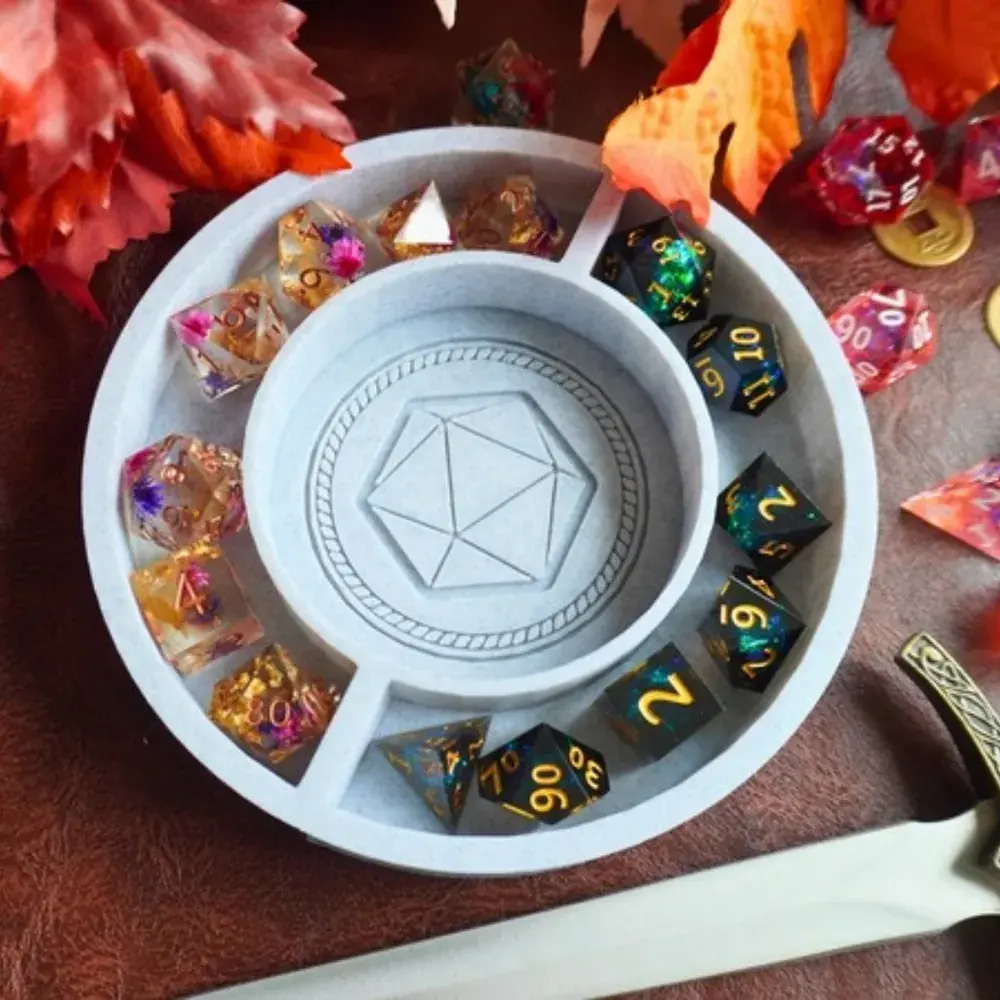
D20 Round Dice Tray
Made by Minva6 × 6 × 1 in · PLA · dice up to 25 mm, sharp-edge sets included
It's 6 inches across, so it fits next to a character sheet, and the compartments around the rim hold the dice you aren't rolling.
Watch out: It's 3D printed in PLA, and the product page warns that small surface marks can show.
Instead: Our D20 Hexagon Dice Tray is deeper at 1.5 inches. A shallow box lid with a cloth in it works too.
From $15.00 at Minva


For players
Remembering what happened last session
After a few sessions the details blur. Who gave you the quest? What was the town called? Why does the rogue owe money to that guild? A D&D journal with the pages already laid out gets used, where a blank notebook tends to end up in a drawer. I compared the options in my guide to the best D&D journal for players.
No. 06Best for one character, one long campaign
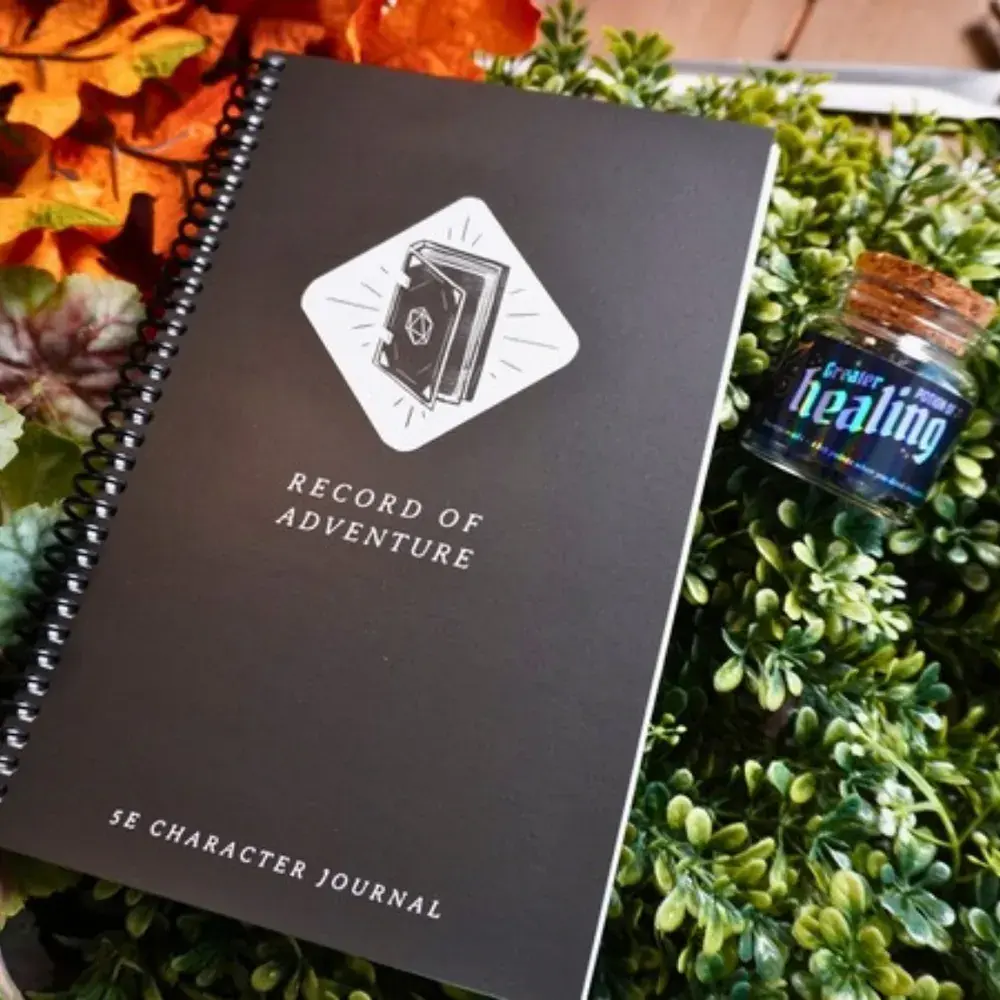
Record of Adventure campaign journal
Made by Minva5.5 × 8.5 in · 80+ pages · 80 lb paper · coil-bound
It holds one character's sheet, spells, inventory, NPCs, locations and session notes in a coil-bound book that lays flat on the table.
Watch out: It's built for one character. If you play two at once, it runs out of the right pages.
Instead: Our Character Compendium is the multi-character version. A plain notebook is the free option.
From $18.00 at Minva

For DMs
Running initiative without losing track
Combat is where most DMs lose time. Initiative ends up on scratch paper, monster HP lives in the margin of your notes, and conditions get forgotten because there's nowhere to write them.
No. 07Best for dms running combat

Combat Tracker Initiative Notepad
Made by Minva5 × 8 in · 50 sheets · 70 lb paper
Each sheet has columns for initiative, name, HP, AC and status, so one page holds a whole fight and you tear it off when the fight ends.
Watch out: 50 sheets is 50 fights, so a table with a fight every week will need a second pad within a year.
Instead: Index cards work (see the next pick), and so do our printable Initiative Tracker Cards.
$9.99 at Minva
No. 08Best for initiative order for free
Index cards or clothespins for initiative
Free · reusable for the whole campaign
Write each player and monster on a card, sort the cards by initiative and flip to the next one each turn. Clothespins with names, clipped to the top of a screen, let the players see who's next.
Watch out: Cards don't track HP, so you'll still need scrap paper for monster damage.
Instead: Our initiative tracker guide compares free apps and paper options.
Free
For DMs
Maps and minis without spending much
Going from theater of the mind to any map at all is the biggest change you can make here. What the map is made of matters a lot less.
No. 09Best for groups that want a grid
TIDYBOSS 36" × 48" Dry Erase Battle Map
36 × 48 in · squares and hexes · ships in a tube
This double-sided mat has 1 inch squares on one side and hexes on the other, and it comes with 4 dry-erase markers, an eraser and 4 clips that hold it flat.
Watch out: At 4 feet long it covers most kitchen tables, so measure yours before you buy.
Instead: Grid paper inside sheet protectors works for small fights.
$39.99 on Amazon (Oct 27, 2026)
No. 10Best for minis on no budget
Coins, Lego figures or paper tokens
Free · anything about 1 inch wide
Anything about 1 inch wide shows position on a grid as well as a mini does. Buy minis later for the characters your group cares about.
Watch out: Two coins look the same in a big fight, so write a letter on a sticky note under each one.
Instead: Paper standees printed on card stock look more like minis.
Free
No. 11Best for dms who need a dungeon tonight

100 One-Page Dungeon Maps
Made by Minva100 PNG files · system-agnostic · instant download
You get 100 one-page dungeon maps as PNG files with transparent backgrounds, so you can print one for yourself or drop it into a VTT.
Watch out: These are overview maps that fit on one page. With minis, you'll still redraw the room the party is in on a grid.
Instead: Sketch your own on grid paper. It takes longer and costs nothing.
$9.99 at Minva
For DMs
Prep and what goes behind the screen
A DM screen hides your notes and rolls. A screen with pockets also lets you choose the rules you look at, and writing your own panels means your homebrew rules can sit next to everything else.
No. 12Best for dms who write their own reference sheets
Stratagem The Master's Tome 4-Panel GM Screen
4 panels · 8 letter-size pockets · 11.5 in tall, folds to ½ in
It has 8 pockets sized for letter paper, so you can swap in your own notes, and you can write on the vinyl with a dry-erase marker.
Watch out: It's over 3 feet wide open, and Amazon only showed the full price in the cart when we checked.
Instead: The official screen works if you only want the printed rules, and a folder stood on its side works for a one-shot.
From $19.99 on Amazon (Oct 27, 2026)
No. 13Best for dms who prep on a laptop

Lorekeeper 5e Notion template
Made by MinvaWorks with a free Notion account · session notes template included
It has linked databases for adventures, locations, treasures, NPCs and characters, so clicking an NPC shows the quests and places tied to them.
Watch out: It only lives in Notion, so it won't help if you prep on paper or don't want another app.
Instead: A paper session journal like our Adventure Log works, or a plain notebook.
$17.99 at Minva
Everyone
Carrying gear to someone else's house
Once you play away from home, the problem becomes the pencil you left on the kitchen counter or the d20 that rolled under somebody else's couch. One case that always goes in the bag fixes it.
No. 14Best for carrying gear to someone else's house
A zip pencil case
Fits a dice set, pencils and markers
One zip case holds your dice, two pencils, an eraser and a dry-erase marker, so nothing gets left behind.
Watch out: Dice knock against each other in a soft case, so wrap sharp-edge resin sets in a cloth.
Instead: A drawstring dice bag works too, or a case with compartments if you carry more than one set.
Free if you have one
Everyone
Playing online
On a VTT, the mat and the minis stop mattering, and so does the screen. Your dice and your notes still matter, and a digital planner like Lorekeeper earns its place here. Our free 5e tools include a dice roller and an initiative tracker that run in a browser tab.
No. 15Best for playing online
A free D&D Beyond account
Free · unlimited character slots need the paid Hero tier
You can read the Basic Rules there, and D&D Beyond says its Maps VTT works with a free account.
Watch out: The free tier limits how many characters you can keep.
Instead: Roll20, Foundry VTT or a dice bot on your Discord server can do the same job.
Free
Budget kits for $25, $50 and $100
Each kit is a full set for one person, and the totals use today's Minva prices plus the Amazon prices from Oct 27, 2026, so they'll move a little whenever one of those prices changes. Shop around.
Under $25
A new player
- Basic Rules (2024)Free
- Mystery Healing Potion Dice Bottle (made by Minva)$15.00
- Sheet protector and markerFree
- Combat Tracker Initiative Notepad (made by Minva)$9.99
Under $50
A player with a regular game
- Mystery Healing Potion Dice Bottle (made by Minva)$15.00
- D20 Round Dice Tray (made by Minva)$15.00
- Record of Adventure journal (made by Minva)$18.00
Under $100
A new DM
- TIDYBOSS battle map (Amazon)$39.99
- Stratagem GM screen (Amazon, from)$19.99
- Combat Tracker Initiative Notepad (made by Minva)$9.99
- 100 One-Page Dungeon Maps (made by Minva)$9.99
- D20 Round Dice Tray (made by Minva)$15.00
New players
What to buy first, second and third
First-time player
- Read the free Basic Rules and make a character with your DM.
- Get one 7-die set, or borrow one for the first session.
- After 3 or 4 sessions, add whatever you missed. For most people that's a journal or a tray.
First-time DM
- Run a short adventure with index cards for initiative and grid paper for maps.
- Buy the 2024 Player's Handbook before the Dungeon Master's Guide. Your players will ask about their options first.
- Add a screen and a battle map once you know you'll run a long campaign.
D&D got a rules revision in 2024. The Basic Rules on D&D Beyond and our cheat sheets use the 2024 version. If your group still plays the 2014 rules, ask before you buy a book.
Buying for someone else
D&D accessories as gifts
Three questions narrow it down fast. Are they a player or the DM? Do they play in person or online? What do they already own? Dice and core rulebooks are the riskiest gifts, because most players have both.
- DM
- The Dungeon Master runs the game and plays the monsters.
- Initiative
- Initiative is the turn order in a fight, rolled at the start of combat.
- Conditions
- Conditions are effects like poisoned or prone that change what a character can do.
- Dice tray
- A dice tray is a shallow box to roll in, so dice stay on the table.
Safe bets are things people rarely buy for themselves: a dice tray, a dice bottle, a tracker, a journal or a subscription box. Our Dice Arcana box sends a new 7-die set each month ($16.99 a month on the monthly plan), and Dragon's Hoard sends dice, minis, pins and other table loot ($39.99 a month on the monthly plan). Our D&D gift guide has the full list by budget, and the subscription box comparison covers what each box ships.


All 15 picks at a glance
| No. | Pick | Best for | Price |
|---|---|---|---|
| 01 | D&D Beyond Basic Rules (2024) | Your first session | Free |
| 02 | A sheet protector and a dry-erase marker | HP that changes every round | Free if you have them |
| 03 | Hair ties or bottle-cap rings as condition markers | Seeing who is poisoned | Free |
| 04 | One 7-die polyhedral set | Every player | Varies by seller |
| 05 | D20 Round Dice TrayMinva | Crowded tables | From $15.00 at Minva |
| 06 | Record of Adventure campaign journalMinva | One character, one long campaign | From $18.00 at Minva |
| 07 | Combat Tracker Initiative NotepadMinva | DMs running combat | $9.99 at Minva |
| 08 | Index cards or clothespins for initiative | Initiative order for free | Free |
| 09 | TIDYBOSS 36" × 48" Dry Erase Battle Map | Groups that want a grid | $39.99 on Amazon (Oct 27, 2026) |
| 10 | Coins, Lego figures or paper tokens | Minis on no budget | Free |
| 11 | 100 One-Page Dungeon MapsMinva | DMs who need a dungeon tonight | $9.99 at Minva |
| 12 | Stratagem The Master's Tome 4-Panel GM Screen | DMs who write their own reference sheets | From $19.99 on Amazon (Oct 27, 2026) |
| 13 | Lorekeeper 5e Notion templateMinva | DMs who prep on a laptop | $17.99 at Minva |
| 14 | A zip pencil case | Carrying gear to someone else's house | Free if you have one |
| 15 | A free D&D Beyond account | Playing online | Free |
How I picked
I've played D&D for 7 years, and every pick here fixes a problem that comes up at a real table. Where a free option does the job, it's on the list, because most groups never need to buy the paid version.
We make 5 of the 15 picks. They're here because they solve one of these problems, and each card lists a drawback and something else you could use. The two Amazon picks are things we don't make, and I chose them for the specs on their listings. Minva prices update live from our shop. I checked the Amazon prices on Oct 27, 2026.
Questions people ask
What do I need to start playing D&D?
You need one set of dice, a pencil, a character sheet and the free Basic Rules. Your DM brings the adventure. Everything else on this page can wait until you know what slows your table down.
What does a DM need that a player doesn’t?
A DM needs a way to track initiative and monster HP, somewhere to keep notes the players can’t see, and a way to show where everyone stands in a fight. Index cards, a folder and grid paper cover it for free.
Are dice towers worth it?
They’re worth it for blind DM rolls and loud tables. For rolling 8d6 for a fireball, a tray is faster because a tower takes a few dice at a time.
Do I need minis to play D&D?
No. Coins, Lego figures or paper tokens show position on a grid just as well, and plenty of groups play theater of the mind with no map at all.
How many dice do I need?
One 7-die set is enough. A second d6 or d8 helps when your character rolls several damage dice at once, but you can roll one die twice.
What should I buy a D&D player as a gift?
Get something they’re unlikely to own already, like a dice tray, a journal or a subscription box. Our D&D gift guide sorts picks by budget and by player or DM.
What changes if we play online?
A VTT handles the map, so mats, minis and a DM screen stop mattering. Dice and a notebook still help, and so does a digital campaign planner.
Keep going